

The Lancaster Field
Analogue Spotlight
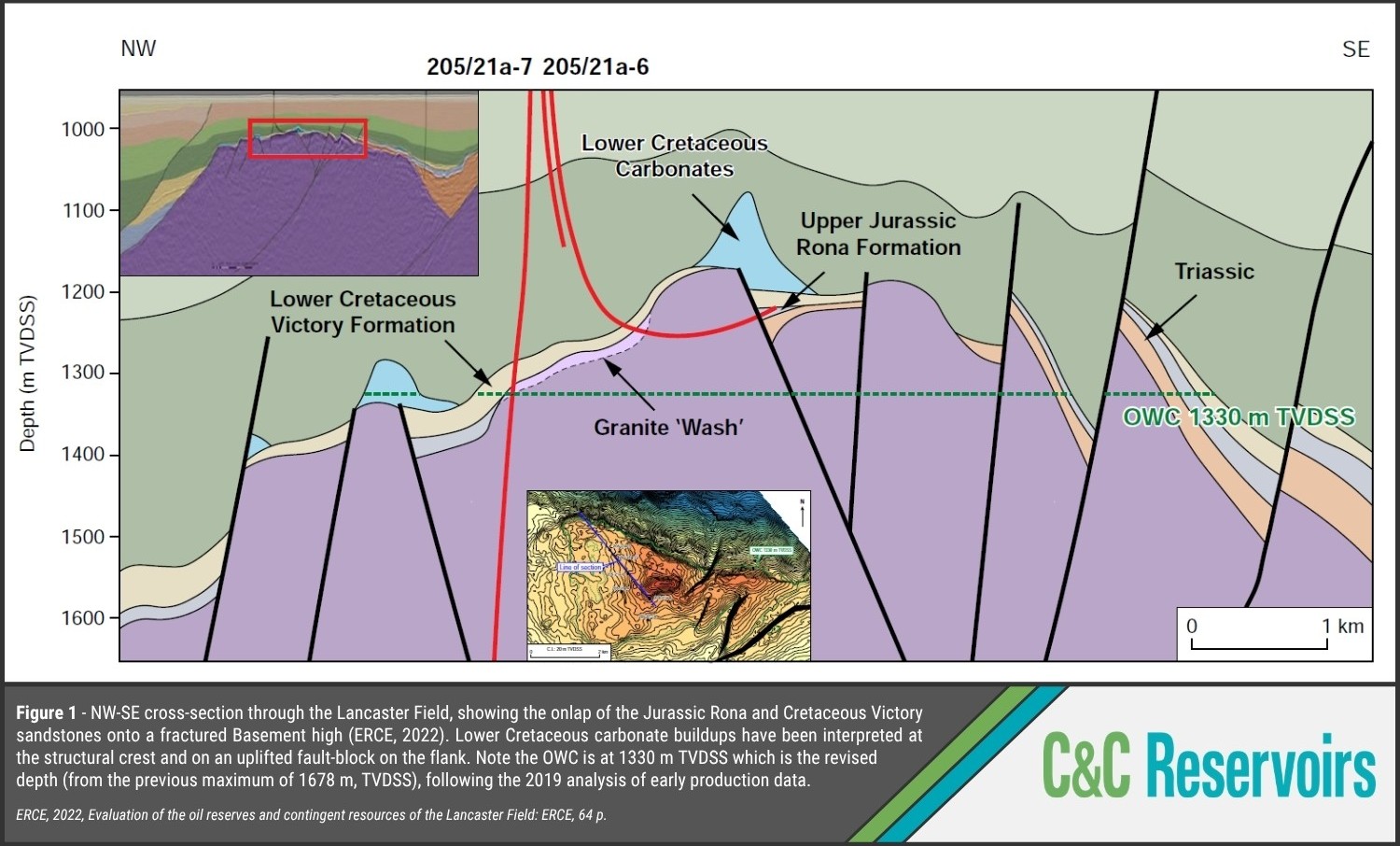
When first discovered in 2009, the Lancaster Field was thought to be a promising example of a fractured basement reservoir on the UK Continental Shelf. Early analysis estimated an impressive field STOIIP of 2326 MMBO and an EUR of 37.3 MMBO (giving a recovery factor of 21%), with the majority of oil trapped within the granitic Precambrian Basement reservoir (Fig. 1).
Fast forward to today, and the outlook couldn’t be more different. The Lancaster Field now faces imminent decommissioning after a dramatic re-evaluation of its resources. New estimates indicate a field STOIIP of just 142 MMBO with an EUR of 21.5 MMBO (giving a recovery factor of 15%). Only 12 MMBO of this is held within the Basement reservoir.
So, what went wrong?
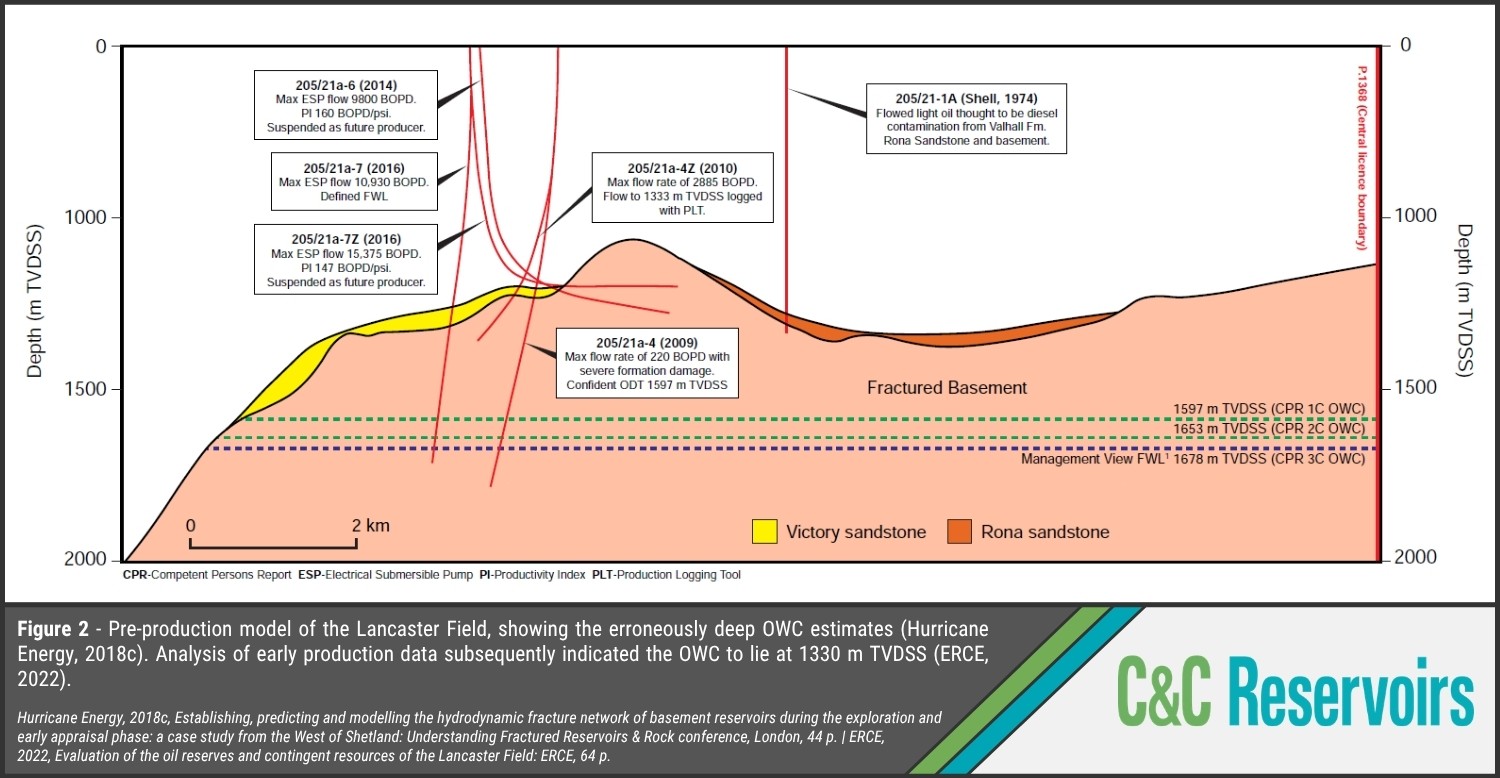
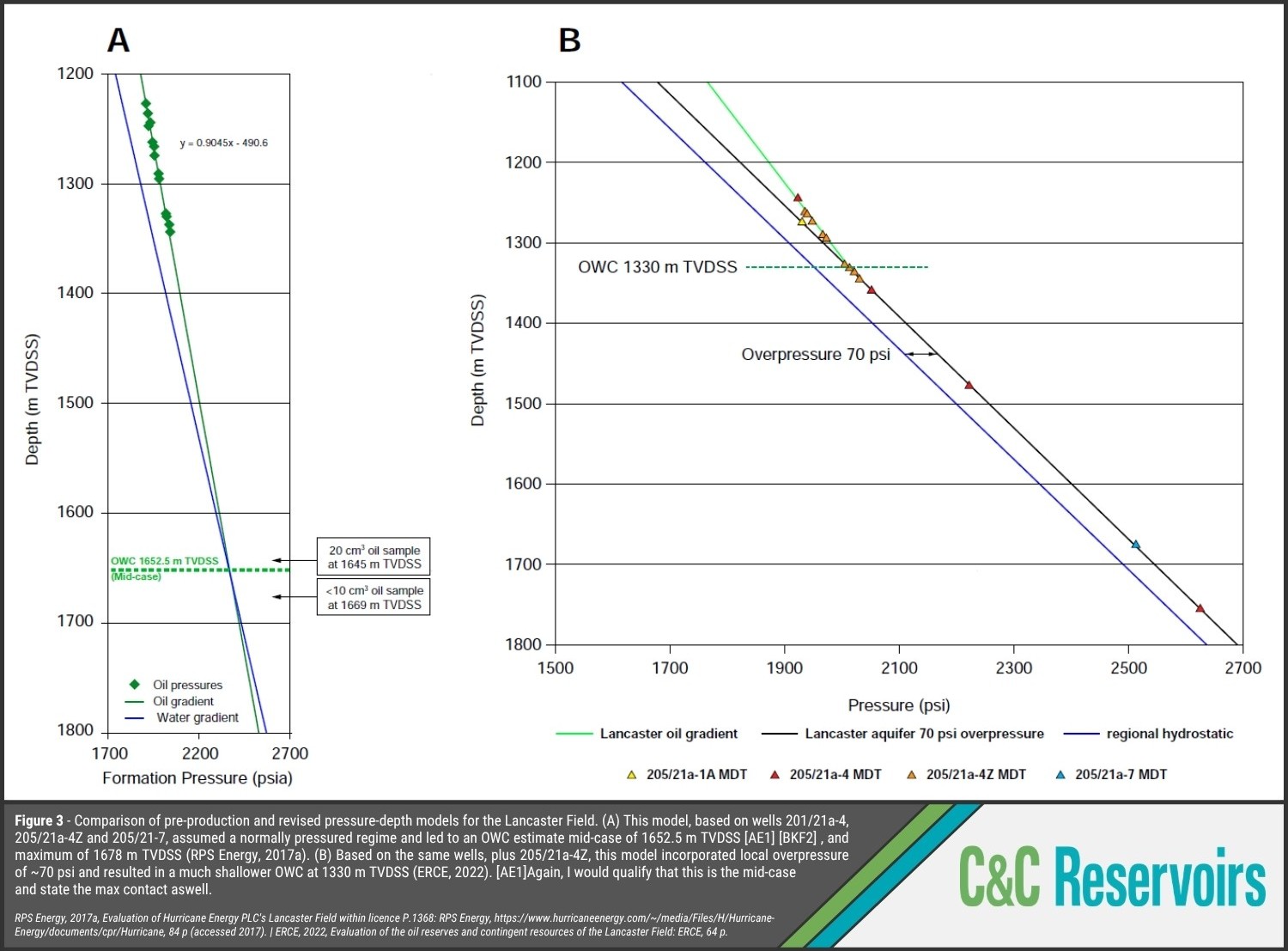
This ~94% downgrade in field resources was initiated in 2020, just one year after production began. Early water breakthrough combined with a rapid drop in reservoir pressure suggested that the OWC, which was initially interpreted at a maximum of 1678 m TVDSS, was in fact, much shallower at 1330 m TVDSS (Fig. 1; Fig. 2). The misinterpretation of the initial OWC depth is thought to have occurred due to the use of a regional normally-pressured water gradient, which obscured a local overpressure of 70 psi in the aquifer at Lancaster (Fig. 3).
A thorough review of field data revealed more surprises. Not only was the original field STOIIP massively overestimated, but the majority of oil wasn’t even in the Basement reservoir. Instead, ~65% of the fields resources are held in the onlapping Jurassic Rona sandstone and Cretaceous Victory sandstone (Fig. 1).
With oil production declining to just 2000 BOPD and water production at 10,000 BWD by 2021, Lancasters fate was sealed. Decommissioning plans were submitted in 2022, and production is expected to cease by Q3 2026.