

The Kelamayi Field
Analogue Spotlight
For this months’ Analogue Spotlight we journey to the Xinjiang province in northwestern China, where the Kelamayi (Karamay) Field – a landmark discovery in the Junggar Basin – stands as a testament to persistence and innovation in oilfield development.
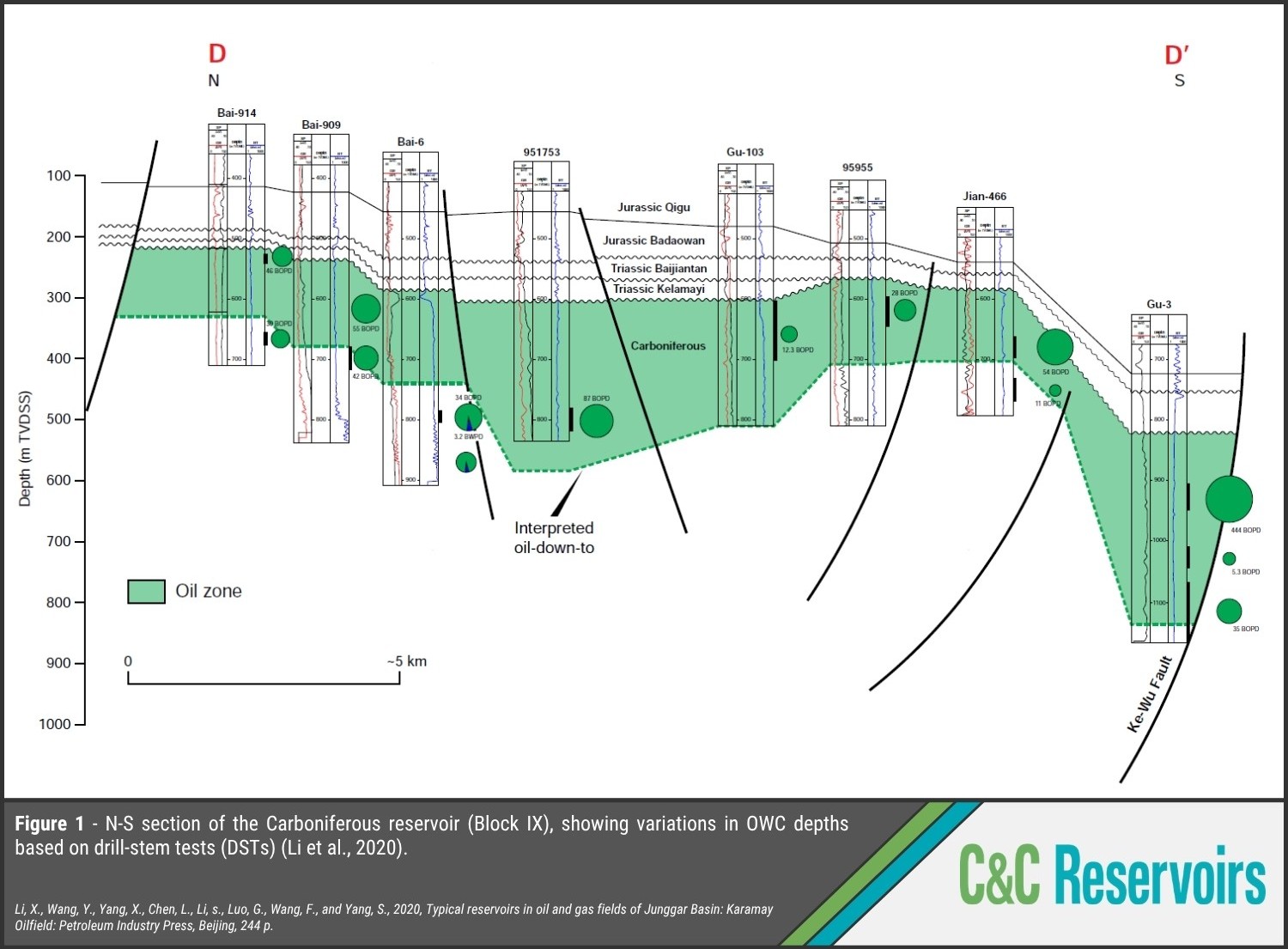
Discovered in the early 1950s, Kelamayi quickly rose to prominence as one of the first major oilfields of China. The field contains >7 BBO in-place and comprises a complex suite of heterogenous reservoirs, including the Carboniferous basement reservoir – home to a towering ~925 m oil column trapped in a thrust-faulted buried hill within highly fractured volcanics and tuffaceous sandstones (Fig. 1), holding a STOIIP of 510 MMBO.
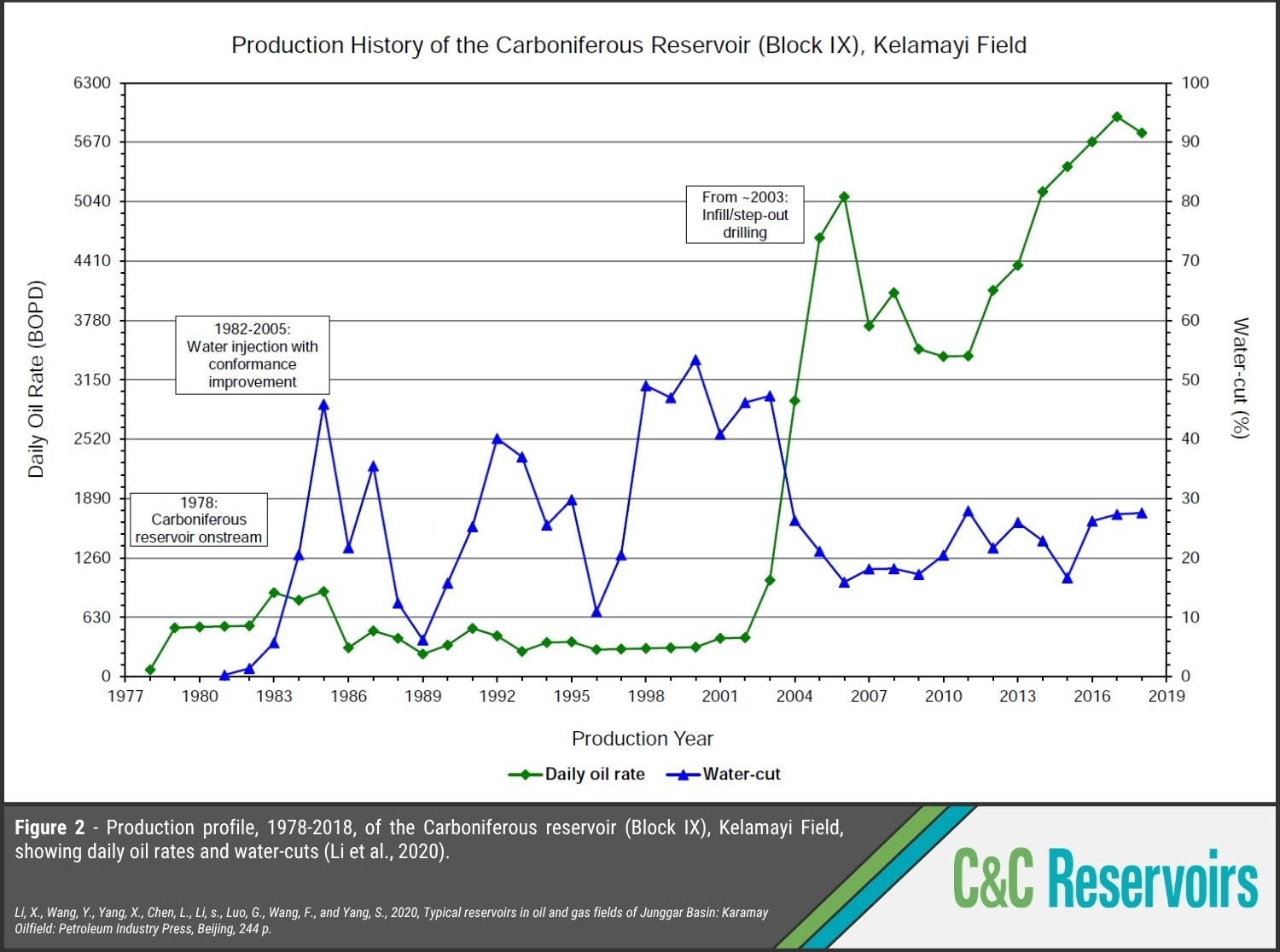
Production from the basement began in 1978 with continuous water injection being implemented in 1982 to help maintain reservoir pressure. Owing to its extreme heterogeneity, a series of conformance improvement methods were introduced, including: selective injection, profile modification, and intermittent injection in fractured zones. Despite these efforts, production was maintained at low rates of 250-900 BOPD for nearly 25 years.
Then came the breakthrough. In 2003, a rejuvenation campaign involving infill and step-out drilling breathed new life into the field, sparking a remarkable turnaround with production soaring to >5000 BOPD in 2006, despite termination of water injection the previous year, and eventually peaking near 6000 BOPD in 2017 (Fig. 2).
Kelamayi’s revival demonstrates how persistence, innovation, and bold strategies can transform decades of stagnation into renewed success.