

The Alpine Field
Analogue Spotlight
In the vast, frozen expanse of Alaska’s North Slope sits this months Analogue Spotlight, the Alpine Field. With over 50 square miles of subsurface resources accessed from a single surface pad, the Alpine Field demonstrates how modern petroleum development can balance large-scale production with environmental stewardship.
The field leverages cutting-edge extended-reach drilling and other innovations to minimize environment impact, making it possible to operate responsibly in an environment known for its ecological sensitivity.
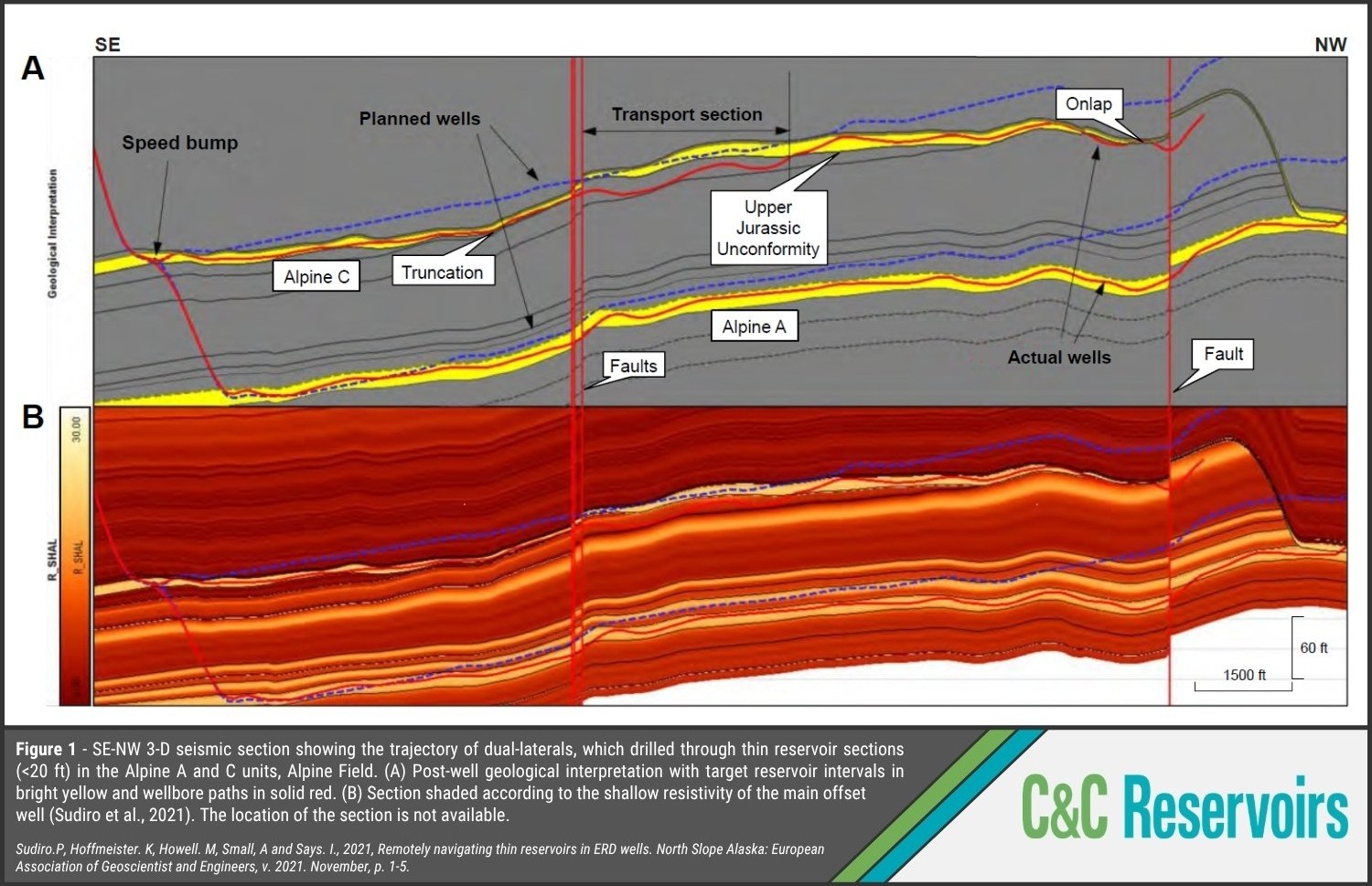
Alpine extracts premium 40 °API gravity, low viscosity (0.45 cP) oil from two primary reservoirs: Alpine A and Alpine C. However, reservoir quality of the fine-grained sandstones is relatively poor. Across both reservoirs the average flow unit thickness is only 24 ft (Fig. 1), with porosity and permeability averaging 17.5% and 10 mD at Alpine A, and 20% and 15 mD at Alpine C.
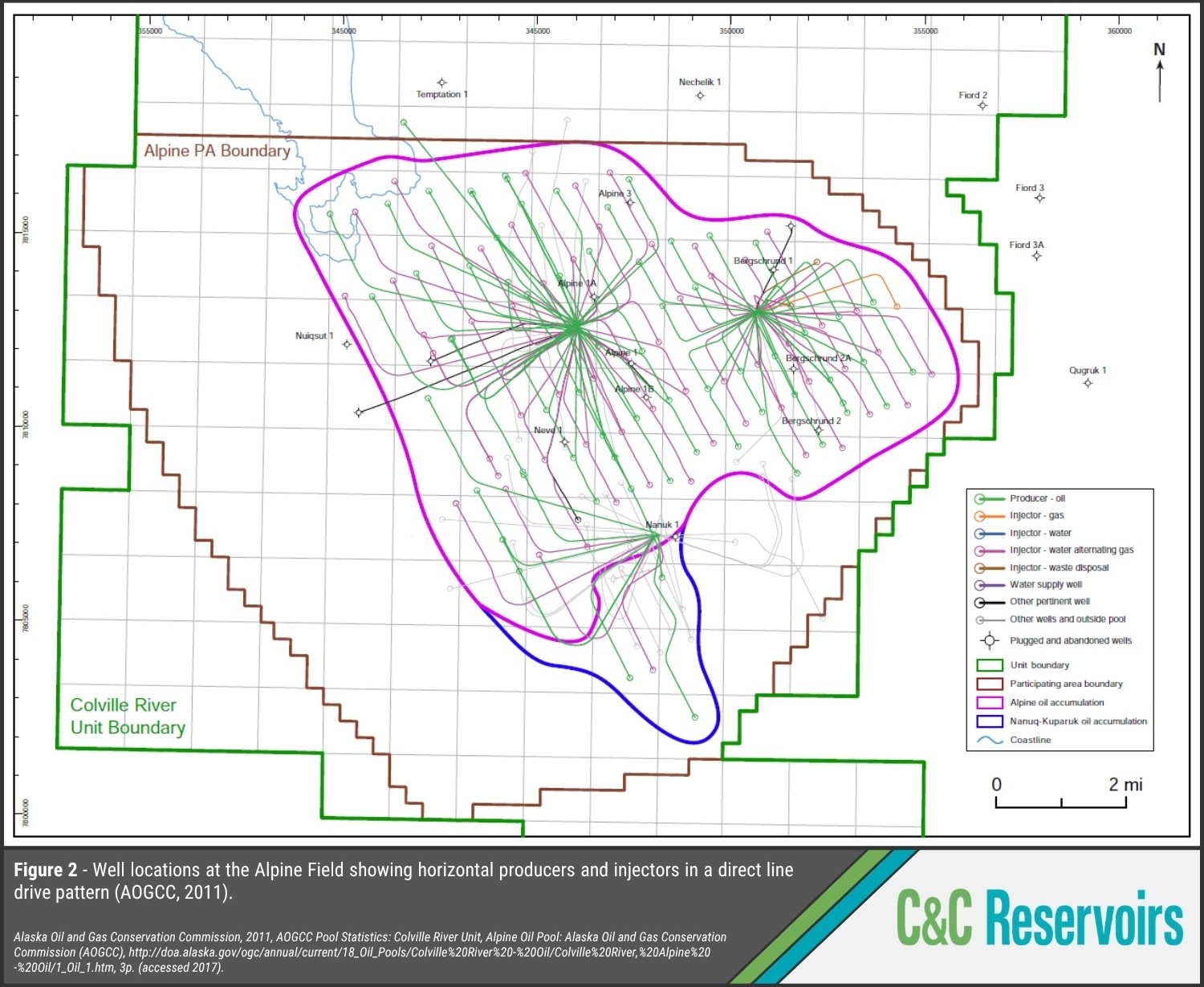
Initially, a mix of horizontal and vertical wells were planned. However, reservoir modelling – supported by pre-production testing – showed horizontal wells alone would be more efficient and productive (due to good vertical connectivity and a favourable water/oil ratio of 0.1). Owing to the weak natural drive energy, water-alternating-gas miscible injection was initiated early with both horizontal producers and injectors in a line-drive pattern.
Early wells extended horizontally up to 6000 ft and, as drilling techniques improved, new and longer wells were drilled – some extending to over 32,000 ft in length (Fig. 2). In addition, the sandstone reservoir remains stable under production drawdowns, allowing open-hole completions, which reduce drilling time, lower costs, and minimize the risk of formation damage.
The success of extended-reach drilling at Alpine meant estimated recoverable reserves have steadily climbed. An original EUR of 250-300 MMBO rose to 429 MMBO and continues to grow – solid proof that innovation, efficiency, and environmental considerations can thrive together in modern oil development.