

The Gohta Field
Analogue Spotlight
Discovered in 2013, Norway’s Gohta Field marked a breakthrough as the first successful test of Permian carbonates on the Norwegian Continental Shelf. Exploration well Gohta-1 revealed significant potential, encountering 75 m of oil and 34 m of gas within the karstified spiculitic carbonates of the Røye Formation. Early estimates were highly encouraging, with expected ultimate recoveries ranging from 63–144 MMBO and 283–530 BCF.
However, this play opening discovery quickly revealed its complexity.
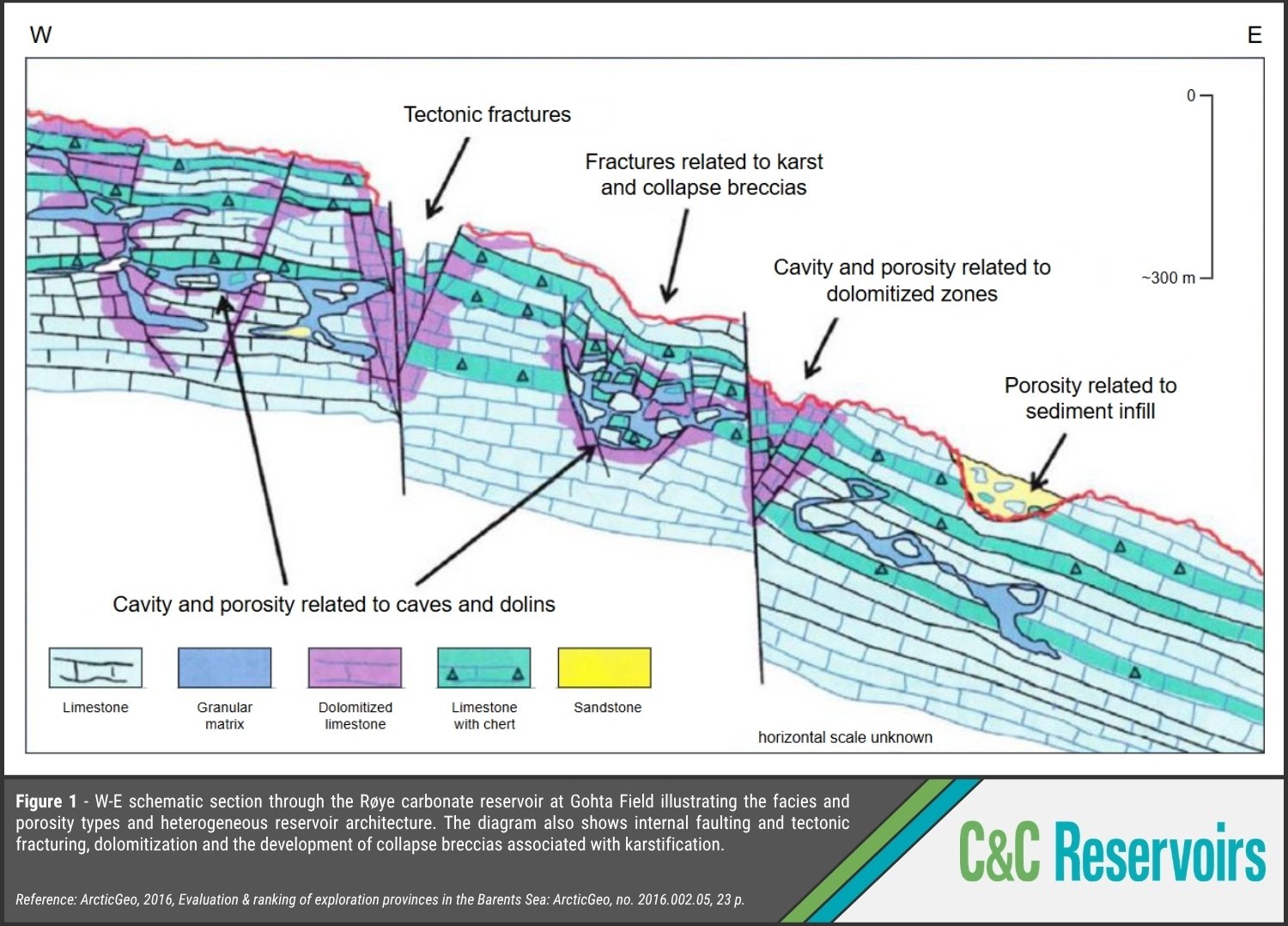
The reservoir proved to be highly heterogeneous. A combination of karstification, dolomitization, tectonic fracturing, and the development of collapsed-paleocave systems created a highly intricate labyrinth architecture (Fig. 1). Despite this complexity, certain facies, particularly the collapsed breccias were demonstrated to have good reservoir quality, with porosities of 15-25% and permeabilities of 0.6-19 mD, keeping early optimism alive.
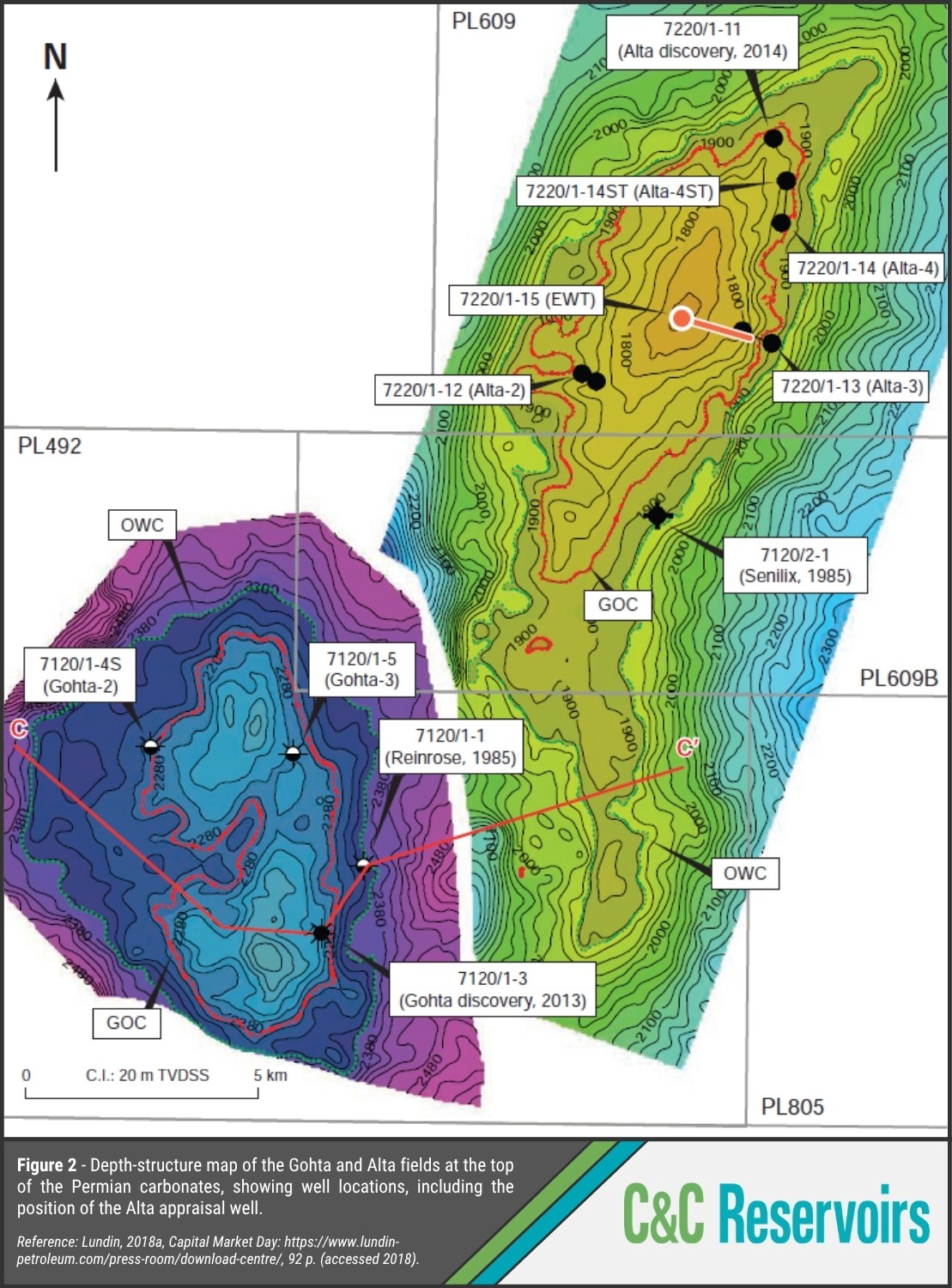
Two further appraisal wells were drilled in 2014 and 2017 following discovery of the neighbouring Alta Field (Fig. 2). However, with net-to-gross ratios of <0.2 observed, instead of the optimistic 0.55 identified in Gohta-1, resource estimates were reduced to ~34 MMBO, and just 67 BCF of free gas.
Today, despite the presence of high-quality light oil (39˚API), Gohta remains on hold with no future drilling planned. The field highlights the challenges of unlocking these highly complex carbonate systems. Further discoveries in the region, combined with improved seismic inversion techniques, could provide improved understanding of the reservoir, with enhanced prediction of the extent of karstification and high-quality reservoir facies, potentially reigniting development interest in coming years.